1
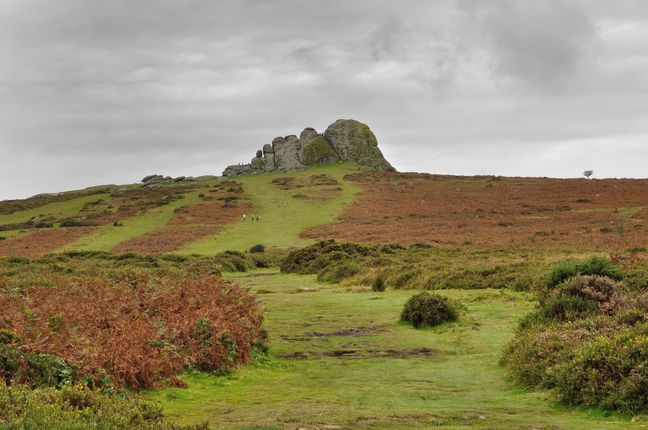
From the Dartmoor National Park Information Centre, cross the road and follow the broad steep grassy path to Haytor Rocks (A)
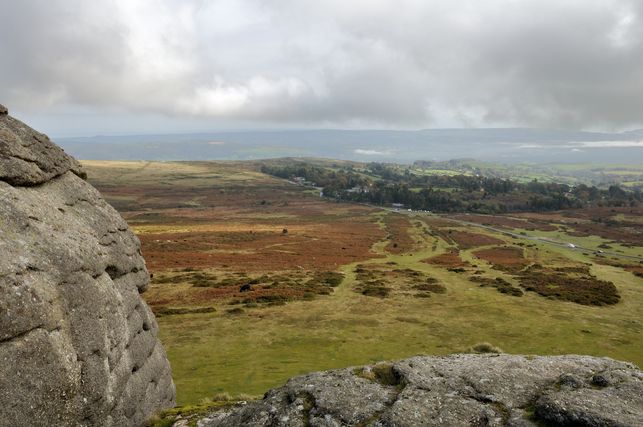
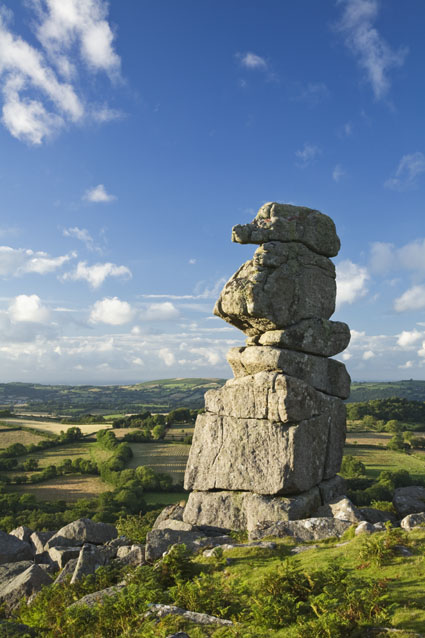
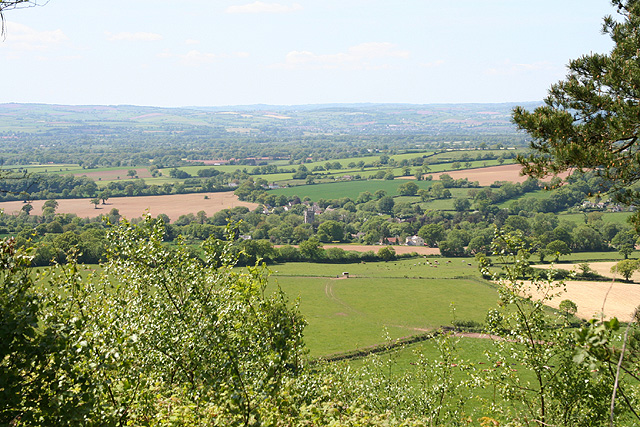
(A) It is possible to climb to the top of the outcrops from where there are magnificent views of the surrounding tors and countryside towards Teignmouth. On the smaller of the two stacks steps have been cut into the rock to assist the ascent. If you attempt the ascent take care in wet weather as the rocks can become very slippery.
2
Bear right to walk beneath the right hand stack, Turn right, and with your back to Haytor Rocks, head down the grassy path towards the Haytor Quarries (now disused and partly flooded). These will soon be seen on the left bordered by a wire fence. Stay on the grassy path but keep the fence on your left and look out on the left for the gate giving access to the quarries.
3
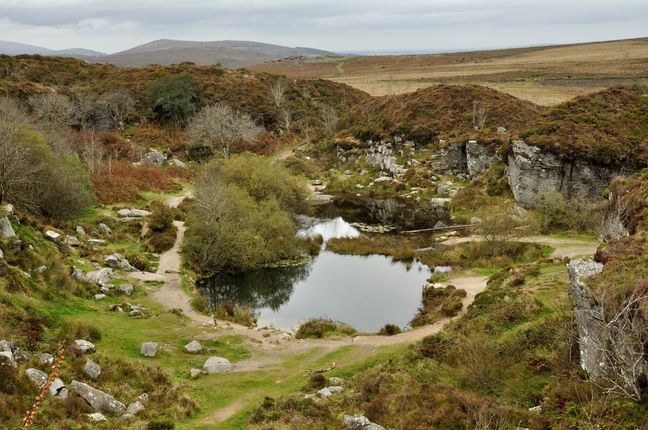
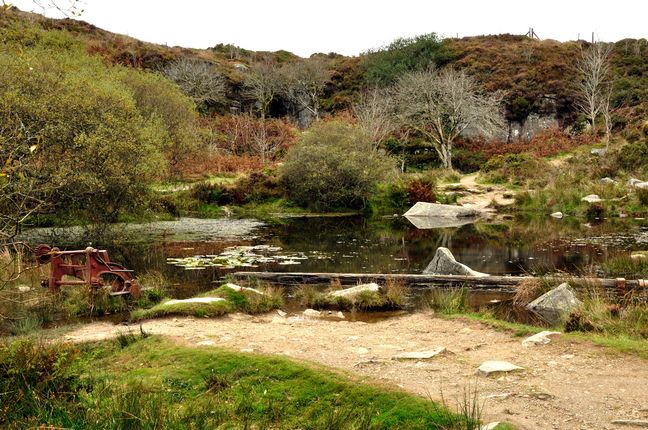
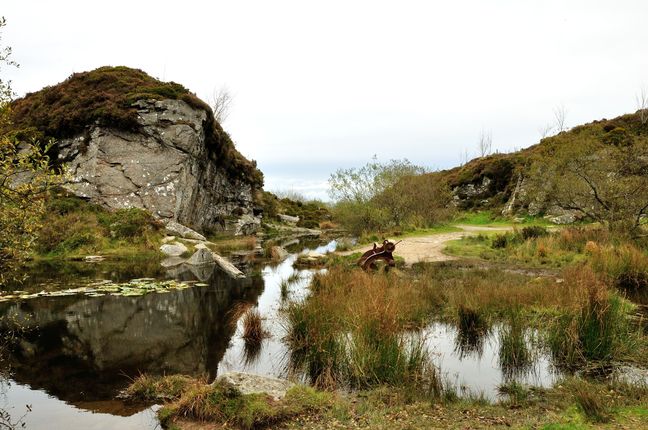
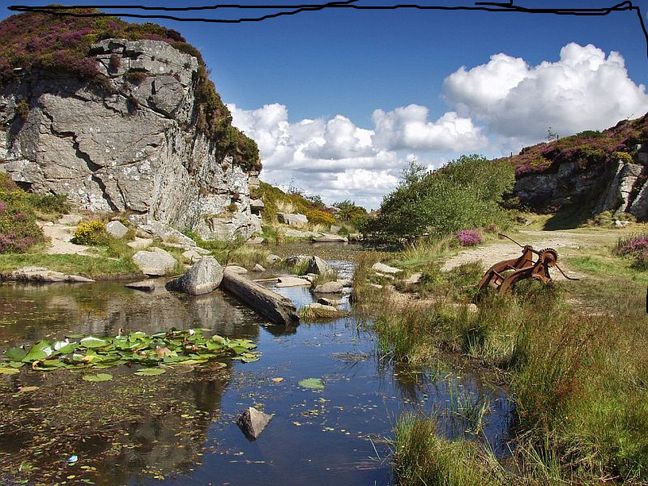
Enter the quarries (B), turning left after the gate to access the upper quarry. Take care on the path as there is a steep drop on the right hand side into the lower quarry which is heavily wooded. Be aware, also, that the quarry pool in the upper quarry is deep. On entering the upper quarry you will see the remains of a crane, consisting of an iron winch and the broken wooden boom of the derrick lying in the quarry pool.
Follow the footpath clockwise through the quarry and exit via a stile on the far side of the pool.
(B) As the quarry is sheltered it is well worth a visit. You can see dragonflies and damsel flies darting about the pond and, occasionally a newt! Uncommon dragonflies like the Keeled Skimmer, a lovely pale blue insect, can be seen during summer and, there are goldfish in the pool!! Apparently these were introduced by a well-meaning person, but have upset the ecology of the pond because they eat many of the insect lavae and tadpoles that live there. You will also find lizards basking on the rocks in the sunshine. Not many trees grow on the open moor, but the shelter provided by the quarry enables holly, rowan and willow to grow.
4
Emerge from the quarry and bear left along a broad path heading towards the prominent group of rocks called Smallacombe Rocks (C) which lie just over ½ mile or 900m away in a northerly direction (GR SX756783). Follow this path, crossing over the disused tramway which forms part of the Templer Way. The going is fairly easy through heather and bracken.
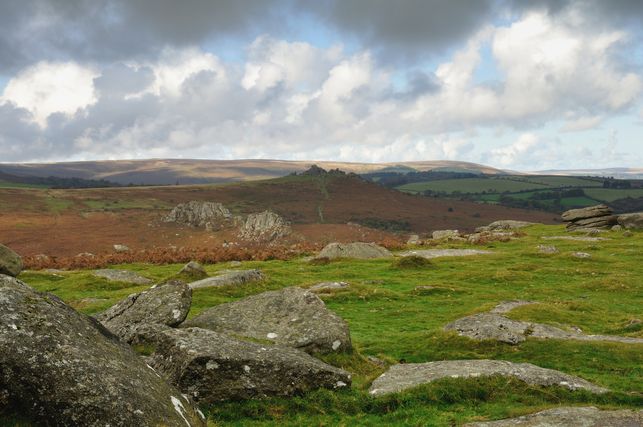
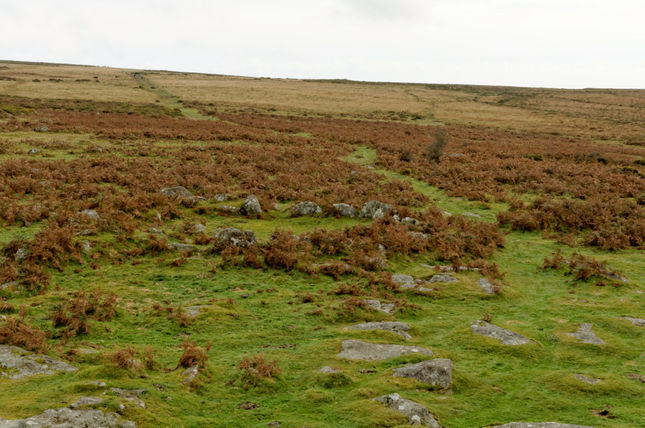
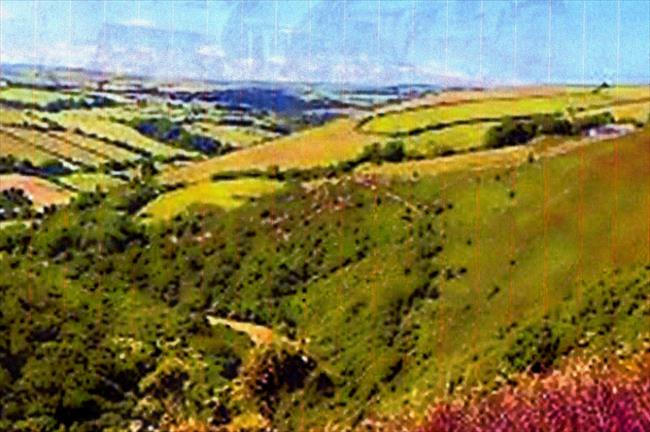
(C) On reaching Smallacombe Rocks, climb them (they’re less than 1.5m or 5 feet high, but could be slippery when wet) & look North Westwards for an excellent view of Hound Tor (see photograph) which, it is believed, gave Sir Arthur Conan Doyle the inspiration for The Hound of the Baskervilles! Climb down and face the way you came (towards Haytor). At 10.00 o’clock you will see a stone circle. This is part of a prehistoric settlement of four round houses. The site was partly excavated in the 1890s, when pottery and flint tools were recovered. You will also see a well-defined track bordered with low stony banks. These are the remains of a prehistoric ‘parallel reave system’, or field system, dating back to the Bronze Age and are about 3,500 years old.
5
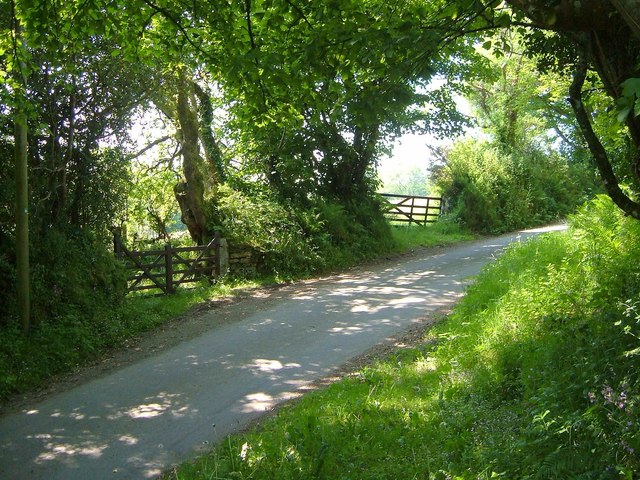
Take the footpath sharp right in a south easterly direction, passing a stone hut circle (C) on the left and follow it for some distance ignoring all joining paths until you reach a small car park on a minor road (GR SX770778). The track is wet and muddy in places.
6
At the car park turn right onto the minor road and follow it downhill until you meet a broad track crossing it. This is the route of the granite tramway (D), sections of which you can see on both sides of the road.
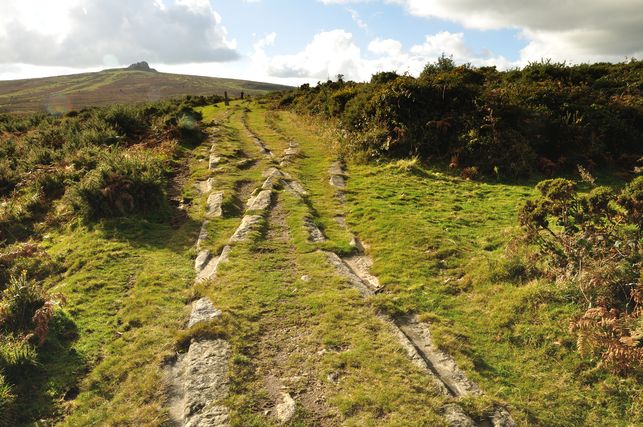
(D) The tramway was built in 1820 to transport quarried granite down to the Stover Canal for onward shipment to Teignmouth Docks. The tramway is a Scheduled Ancient Monument and is unique as it consists of parallel lines of granite setts, rather than iron rails, with flanges cut along the upper outside edges. When laid end to end the flanges formed a continuous rail, along which ran horse-drawn flat-topped trucks running on flangeless wheels. Each truck could carry up to three tons of granite.
Where the line divided, specially designed granite points with holes drilled for the fitting of a guide device, were inserted.
7
Turn left along the track over the road and follow it for a short distance to view an excellent example of track showing a set of stone points.Retrace your steps along the tramway and follow it back over the road and past a stone pillar. Keep straight on along the track alongside the tramway until you reach a large triangular stone.
8
Turn left at the stone and take a footpath heading in the general direction of Haytor Rocks. After crossing a stream you will pass the remains of stone buildings with a stone gatepost. These building were homes to some of the quarrymen.
9
Just beyond the gatepost you will intersect a broad path leading (on the right) to the gate into the quarry you visited earlier. At this point turn left and follow the path downhill, and then take the left fork down to the National Park Information Centre.